logo
ホーム ニュース

会社のニュース Nvidia Boasts 7 Chips in Production for Vera Rubin Platform, Including Groq 3 LPU

認証
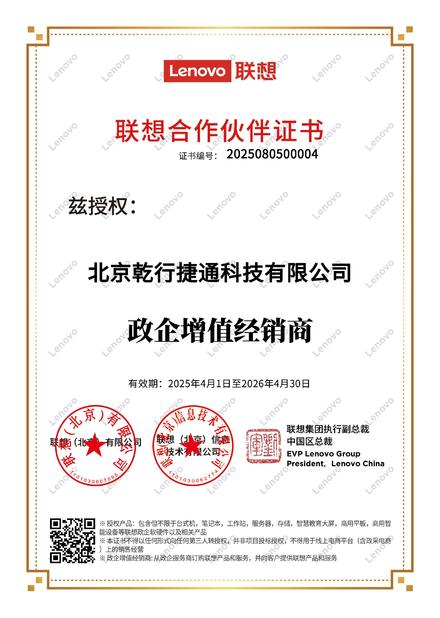
中国 Beijing Qianxing Jietong Technology Co., Ltd. 認証
顧客の検討
北京Qianxing Jietongの技術Co.、株式会社の販売スタッフは非常に専門および忍耐強い。それらは引用語句をすぐに提供してもいい。プロダクトの質そして包装はまた非常によい。私達の協同は非常に滑らかである。

—— 《のFestfing DVの》 LLC

私がIntel CPUおよび東芝SSDを緊急に捜していたときに、北京Qianxing Jietongの技術Co.、株式会社からのサンディは私に多くの助けを与え、私に私がすぐに必要としたプロダクトを得た。私は実際に彼女を認める。

—— キティ円

北京Qianxing Jietongの技術Co.、株式会社のサンディは私がサーバーを買う時間の構成間違いを私に思い出させることができる非常に注意深いセールスマンである。エンジニアはまた非常に専門で、すぐにテスト プロセスを完了できる。

—— Strelkin Mikhail Vladimirovich

北京千星捷通との仕事は大変満足しています。製品の品質は素晴らしく、納期も常に守られています。営業チームはプロフェッショナルで、忍耐強く、私たちの質問にすべて丁寧に対応してくれます。彼らのサポートに心から感謝しており、長期的なパートナーシップを期待しています。強くお勧めします!

—— アフマド・ナビド

品質: 提供者との素晴らしい経験. MikroTik RB3011は既に使用されていましたが,非常に良い状態で,すべてが完璧に動作しています. コミュニケーションは迅速でスムーズでした.そして私の懸念はすぐに解決されました信頼性の高いサプライヤーです 強くお勧めします

—— ゲラン・コレシオ

オンラインです
会社 ニュース
Nvidia Boasts 7 Chips in Production for Vera Rubin Platform, Including Groq 3 LPU
Nvidia announced a key hardware update at its GPU Technology Conference (GTC) in San Jose today, barely two months after it acquired chip startup Groq and all its intellectual property for $20 billion. Even with the deal only recently finalized, Groq’s Language Processing Unit (LPU) is already in mass production, and is being integrated into Nvidia’s full Vera Rubin chip stack — which now includes a total of seven new chips that have entered production.

Groq was founded in 2016 by former Google engineers who were part of the original Tensor Processing Unit (TPU) team. The company designs custom ASIC chips built specifically for fast, low-latency AI inference processing. Ian Buck, Nvidia’s vice president and general manager of accelerated computing, stated that combining the “extreme flops” of Rubin GPUs with the strong bandwidth of Groq LPUs will create a uniquely powerful solution for AI workloads.

最新の会社ニュース Nvidia Boasts 7 Chips in Production for Vera Rubin Platform, Including Groq 3 LPU  0

“GPUs have large memory and strong floating-point performance, delivering high throughput and fast token rates for the mainstream market, and they excel at general AI tasks,” Buck said in a press briefing the previous day. “But the LPU is optimized solely for extreme low-latency token generation, capable of pushing thousands of tokens per second.”

“The tradeoff is that it takes multiple chips to reach that level of performance,” he added. Each Groq 3 LPU has just 500 MB of SRAM, just 1/500 the memory capacity of Rubin GPUs, according to Buck. “But the bandwidth is exceptional — Rubin GPUs offer up to 22TBps, while Groq LPUs reach 150TB per second.”

Nvidia is working to combine the two processors, Buck confirmed, to unify the GPU’s decoding operations with the LPU’s low-latency work, allowing the two to run as one unified system rather than separate components.

The Groq 3 LPX rack that Nvidia unveiled at GTC will be deployed alongside NVL72 racks, delivering dedicated capacity for AI inference and agentic AI workloads. Per Nvidia’s presentation, the Groq 3 LPX rack can hold up to 256 LPU accelerators, equipped with 128GB of SRAM and a staggering 40 petabytes per second of SRAM memory bandwidth. The rack delivers up to 640TB per second of scale-up bandwidth in total, and Nvidia notes it could eventually scale to house more than 1,000 LPUs.

Pairing a Groq 3 LPX rack with a Rubin NVL72 system enables customers to generate one million tokens for just $45 on a 1 trillion-parameter GPT model with a 400k token context window, according to Nvidia. That figure represents 35 times more tokens than the Rubin NVL72 system can generate on its own.

最新の会社ニュース Nvidia Boasts 7 Chips in Production for Vera Rubin Platform, Including Groq 3 LPU  1

Groq 3 LPUs are not the only new chips Nvidia is leveraging to boost AI inference capacity. The company also announced a dedicated rack for its Vera CPUs — the ARM-based processors paired with two Rubin GPUs to build the superchips at the core of Nvidia’s NVL72 and NVL8 systems.

As CPUs have emerged as a key bottleneck for AI inference and agentic AI workloads, enterprises are increasingly demanding greater CPU resources. In response, Nvidia has launched a standalone CPU-only rack, named the Vera CPU Rack, which features 256 Vera CPUs connected to 400TB of LPDDR5x memory operating at 300TBps.

The Vera CPU Rack also comes equipped with a Spectrum-X Ethernet spine and 64 BlueField-4 data processing units (DPUs). These DPUs coordinate with GPUs in NVL72 systems via Nvidia’s NVLink-C2C interconnect, delivering 1.8TBps of coherent bandwidth — seven times the bandwidth of PCIe Gen 6, per the company.

Nvidia states the Vera rack can support 22,500 concurrent CPU environments, meeting the massive CPU demand required to run AI inference and agentic workloads smoothly. The rack uses liquid cooling and is built on Nvidia’s MGX reference architecture, which the company highlights is backed by 80 ecosystem partners, and it will be distributed through Nvidia’s global partner network.

Nvidia also announced a new rack full of BlueField-4 DPUs, one of the seven new chips that Nvidia touted as making up the new AI supercomputer. The BlueField-4 STX is the first rack-scale implementation of Nvidia’s new CMX (context memory storage) platform, which expands GPU memory from HBM into primary NVMe storage. It unveiled CMX in January, and Nvidia’s storage partners, such as VAST Data, which presented on its CMX storage offering at its conference a few weeks ago, are beginning to adopt it via the Nvidia STX reference architecture.


“The STX is a high-bandwidth, shared layer optimized for storing and retrieving the massive key value cache data generated by agentic workflows,” Buck said. “This is a reference architecture. While Nvidia is not going to be providing it directly, we’re providing [the reference architecture] to all of our storage partners and the entire storage ecosystem so that they can build the next generation of storage for AI factories that has 4x the performance per watt, double the pages per second for enterprise data, and delivering 5x the tokens per second of context memory necessary for AI factories running agentic workflows.”


Cloudian, DDN, Dell Technologies, Everpure (forerly Pure Storage), Hitachi Vantara, HPE, IBM, MinIO, NetApp, Nutanix, and WEKA are all building new storage on the BlueField-4 STX reference architecture, Nvidia said, while companies like CoreWeave, Crusoe, IREN, Lambda, Mistral AI, Nebius, Oracle Cloud Infrastructure (OCI), and Vultr are adopting it.


All told, Nvidia is showcasing seven new chips at GTC that each have a role for powering AI in the Vera Rubin platform. This includes Vera CPU, Rubin GPU, NVLink 6 Switch, ConnectX-9 SuperNIC, BlueField-4 DPU, Groq 3 LPU, and SpectrumX CPO, the new co-packaged optics Ethernet switch that delivers 200 Gbps connectivity over silicon photonics. Nvidia announced the SpectrumX chip at GTC 2025, and it’s now in production, CEO Jensen Huang said in his keynote.


Beijing Qianxing Jietong Technology Co., Ltd.
Sandy Yang/Global Strategy Director
WhatsApp / WeChat: +86 13426366826
Email: yangyd@qianxingdata.com
Website: www.qianxingdata.com/www.storagesserver.com


Business Focus:
ICT Product Distribution/System Integration & Services/Infrastructure Solutions
With 20+ years of IT distribution experience, we partner with leading global brands to deliver reliable products and professional services.
“Using Technology to Build an Intelligent World”Your Trusted ICT Product Service Provider!


パブの時間 : 2026-03-18 14:05:18 >> ニュースのリスト
連絡先の詳細
Beijing Qianxing Jietong Technology Co., Ltd.

コンタクトパーソン: Ms. Sandy Yang

電話番号: 13426366826

私達に直接お問い合わせを送信 (0 / 3000)