logo
ホーム ニュース

会社のニュース Panmnesia and Meta take single chip, CXL-based view of AI datacenters

認証
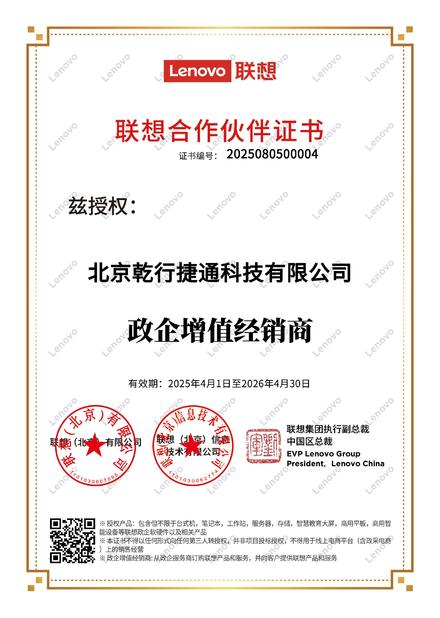
中国 Beijing Qianxing Jietong Technology Co., Ltd. 認証
顧客の検討
北京Qianxing Jietongの技術Co.、株式会社の販売スタッフは非常に専門および忍耐強い。それらは引用語句をすぐに提供してもいい。プロダクトの質そして包装はまた非常によい。私達の協同は非常に滑らかである。

—— 《のFestfing DVの》 LLC

私がIntel CPUおよび東芝SSDを緊急に捜していたときに、北京Qianxing Jietongの技術Co.、株式会社からのサンディは私に多くの助けを与え、私に私がすぐに必要としたプロダクトを得た。私は実際に彼女を認める。

—— キティ円

北京Qianxing Jietongの技術Co.、株式会社のサンディは私がサーバーを買う時間の構成間違いを私に思い出させることができる非常に注意深いセールスマンである。エンジニアはまた非常に専門で、すぐにテスト プロセスを完了できる。

—— Strelkin Mikhail Vladimirovich

北京千星捷通との仕事は大変満足しています。製品の品質は素晴らしく、納期も常に守られています。営業チームはプロフェッショナルで、忍耐強く、私たちの質問にすべて丁寧に対応してくれます。彼らのサポートに心から感謝しており、長期的なパートナーシップを期待しています。強くお勧めします!

—— アフマド・ナビド

品質: 提供者との素晴らしい経験. MikroTik RB3011は既に使用されていましたが,非常に良い状態で,すべてが完璧に動作しています. コミュニケーションは迅速でスムーズでした.そして私の懸念はすぐに解決されました信頼性の高いサプライヤーです 強くお勧めします

—— ゲラン・コレシオ

オンラインです
会社 ニュース
Panmnesia and Meta take single chip, CXL-based view of AI datacenters


Meta and CXL tech supplier Panmnesia say AI data centers need viewing as a single co-ordinated processing resource, not as a co-located set of independent servers.


The AI data center should be a tightly-coupled resource, with a single coherence domain, like a CPU chip. This is different from existing, loosely-coupled, request-driven, enterprise data centers, which have many coherence domains. AI data centers can execute a single job across hundreds, even thousands, of GPUs, roughly similar to a high-performance computing workload involving co-ordinated processor cores, memory and network links.


最新の会社ニュース Panmnesia and Meta take single chip, CXL-based view of AI datacenters  0


Panmnesia and Meta have jointly proposed a next-generation AI datacenter architecture like this, in which the datacenter operates like a single chip. The work appears in NREE, a Nature Portfolio journal.


Myoungsoo Jung
Myoungsoo Jung, CEO of Panmnesia, said: “As AI systems continue to scale, the ability to connect large numbers of accelerators and memory devices quickly and efficiently is becoming just as important as the performance of individual accelerators. This research outlines a direction for next-generation AI infrastructure, where CXL enables the entire datacenter to operate as a single computing system.”


最新の会社ニュース Panmnesia and Meta take single chip, CXL-based view of AI datacenters  1


The components on a single processing chip, cores, etc., are designed and placed so that they have uniform link paths in a single coherence domain and do their work in a timed, co-ordinated and controlled way. In contrast existing data centers have server processors and storage in rack shelves with in-rack and between-rack network links and switches. There is no control structure so that server processing is co-ordinated.


Chip-like datacenter
Panmnesia says: “In current datacenters, accelerators inside a rack are joined by fast scale-up interconnects, while connections that leave the rack — and connections to devices other than accelerators — depend on slower scale-out networks. Measurements of such environments show heavy-tailed latency distributions, with 99th-percentile round-trip latency roughly five times the median. This is what holds the overall job back, and the more devices participate, the more often and more severely it occurs.”


For an AI datacenter to operate efficiently and speedily there needs to be control and co-ordination both in-rack and between racks of GPUs, their memory and storage. In large-scale AI infrastructure, it says, reducing latency variation between devices so that the datacenter as a whole behaves predictably matters as much as improving individual-device performance or link speed.


Panmnesia LAU
Meta and Panmnesia are proposing CXL be used, as the basis for this, with new concepts enabling it to operate at the multi-GPU-rack level. Extended CXL provides cache coherence between racks of accelerators in their scheme, supporting a larger number of devices than Nvidia’s rack-scale, NVLink-based GB200 NVL72 and UALink.


This defines the basic rules for joining devices together but not data routing and latency. They propose three dedicated hardware elements to reduce and limit latency variation:
High-fan-out non-blocking switch: connects many devices at once, reducing the number of hops and keeping path lengths similar regardless of the source.
Link acceleration unit (LAU): moves repetitive protocol processing at each connection point onto a dedicated hardware pipeline, making hop-level behavior more regular and bounding latency variation.
Fabric controller: applies the same ordering policy for handling requests across the entire system, so that transactions are processed consistently no matter which device they pass through.


Panmnesia high fan-out and non-blocking switch
The fabric controller (a combined CXL/PCIe controller) and the LAU have completed silicon validation, and the fabric switch has been fabricated as a physical silicon chip, with pre-release silicon now being supplied. This demonstrates that the proposed architecture holds at the level of manufacturable silicon.


Their architecture groups CPUs, accelerators, memory, and switches by function into trays, groups trays into pods, and connects pods through a fabric — a regular tray–pod–fabric hierarchy designed to preserve fixed-hop, more consistent communication paths and timing.


Panmnesia Fabric Controller
Compared to Nvidia’s design, in which one CPU is coupled to two accelerators over NVLink-C2C, the rack interior is connected by NVLink, and servers and racks are joined by a scale-out network such as Ethernet or InfiniBand, their scheme:
Provides an 8x increase in accelerators directly coordinated by a single CPU; from 2 to 16,
Enables up to 960 accelerators to operate together in a single coherence domain,
Reduces data access latency from the microsecond level to several hundred nanoseconds; approximately an order of magnitude lower,
The failure replacement unit becomes a malfunctioning single device instead of a server. Separating resources by type allows the system to replace only the malfunctioning devices rather than an entire server, avoiding wasted resources and prolonged operational halts.


最新の会社ニュース Panmnesia and Meta take single chip, CXL-based view of AI datacenters  2


Panmnesia has already implemented the architecture's core components in silicon, completed validation, and is now preparing them for commercial supply. Future developments are looking at optical interconnects to increase speed and scalability.


Bootnote
The NREE article reference is available.


Beijing Qianxing Jietong Technology Co., Ltd.
Sandy Yang/Global Strategy Director
WhatsApp / WeChat: +86 13426366826
Email: yangyd@qianxingdata.com
Website: www.qianxingdata.com/www.storagesserver.com
Business Focus:
ICT Product Distribution/System Integration & Services/Infrastructure Solutions
With 20+ years of IT distribution experience, we partner with leading global brands to deliver reliable products and professional services.
“Using Technology to Build an Intelligent World”Your Trusted ICT Product Service Provider!

パブの時間 : 2026-09-10 13:51:03 >> ニュースのリスト
連絡先の詳細
Beijing Qianxing Jietong Technology Co., Ltd.

コンタクトパーソン: Ms. Sandy Yang

電話番号: 13426366826

私達に直接お問い合わせを送信 (0 / 3000)