logo
ホーム 事例

Hypervisor Showdown: Performance of Leading Virtualization Solutions

認証
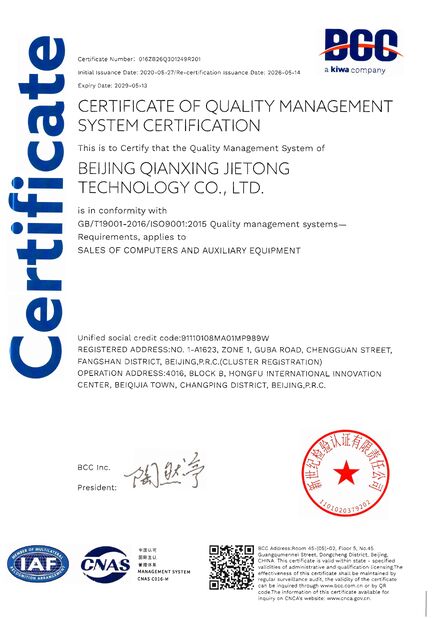
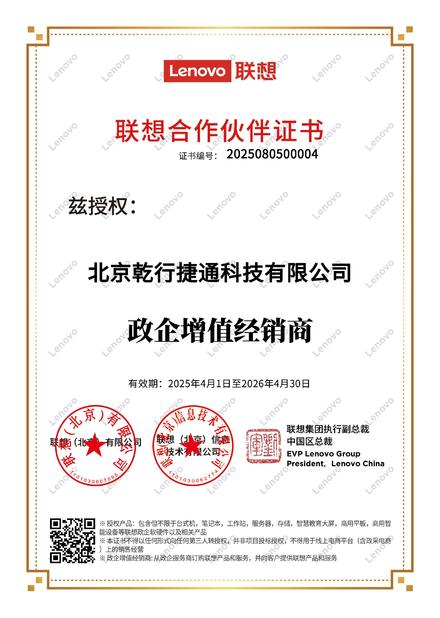
中国 Beijing Qianxing Jietong Technology Co., Ltd. 認証
顧客の検討
北京Qianxing Jietongの技術Co.、株式会社の販売スタッフは非常に専門および忍耐強い。それらは引用語句をすぐに提供してもいい。プロダクトの質そして包装はまた非常によい。私達の協同は非常に滑らかである。

—— 《のFestfing DVの》 LLC

私がIntel CPUおよび東芝SSDを緊急に捜していたときに、北京Qianxing Jietongの技術Co.、株式会社からのサンディは私に多くの助けを与え、私に私がすぐに必要としたプロダクトを得た。私は実際に彼女を認める。

—— キティ円

北京Qianxing Jietongの技術Co.、株式会社のサンディは私がサーバーを買う時間の構成間違いを私に思い出させることができる非常に注意深いセールスマンである。エンジニアはまた非常に専門で、すぐにテスト プロセスを完了できる。

—— Strelkin Mikhail Vladimirovich

北京千星捷通との仕事は大変満足しています。製品の品質は素晴らしく、納期も常に守られています。営業チームはプロフェッショナルで、忍耐強く、私たちの質問にすべて丁寧に対応してくれます。彼らのサポートに心から感謝しており、長期的なパートナーシップを期待しています。強くお勧めします!

—— アフマド・ナビド

品質: 提供者との素晴らしい経験. MikroTik RB3011は既に使用されていましたが,非常に良い状態で,すべてが完璧に動作しています. コミュニケーションは迅速でスムーズでした.そして私の懸念はすぐに解決されました信頼性の高いサプライヤーです 強くお勧めします

—— ゲラン・コレシオ

オンラインです

Hypervisor Showdown: Performance of Leading Virtualization Solutions

March 12, 2026
In the aftermath of VMware’s recent acquisition by Broadcom, the tech community has been abuzz with discussions about the resulting changes—most notably the shift to subscription-based licensing. This has led many companies and MSPs to seek out more cost-effective hypervisor options. In response to this growing interest, we have compared leading hypervisors, presenting them as practical alternatives for those considering a switch or exploring options in the market.
 
Our goal is to analyze these hypervisors in terms of their features, web interfaces, and performance capabilities. Specifically, we are comparing KVM on RHEL, Proxmox, VMware ESXi 8, and Microsoft Hyper-V.
最新の会社の事例について Hypervisor Showdown: Performance of Leading Virtualization Solutions  0
KVM on RHEL (RedHat Enterprise Linux)
KVM (Kernel-based Virtual Machine) is a Linux-based open-source hypervisor that turns Linux into a type-1 hypervisor by integrating core virtualization capabilities into the Linux kernel. While KVM can run on any Linux distribution, Red Hat Enterprise Linux (RHEL) is popular due to its robust support and enterprise-grade features.
 
RHEL is a versatile Linux distribution that can be installed with or without a desktop environment. The management interface, Cockpit, is an optional service that can be added during installation. An open-source project not exclusive to RHEL, Cockpit enables basic Linux instance and service management. However, it is not primarily designed as a hypervisor management tool and lacks certain features like memory ballooning—a limitation of the management interface, not the hypervisor itself.
 
For more advanced virtualization and container orchestration, Red Hat offers OpenShift, a comprehensive platform with a cloud-first approach that can also be hosted on-premises. OpenShift provides robust tools for managing containerized applications and infrastructure, including advanced networking, storage, and security features. However, OpenShift has a minimum production requirement of at least three nodes, making it less suitable for smaller deployments.
 
Proxmox
Based on Debian, Proxmox is another KVM implementation gaining popularity in homelabs and enterprises—though not yet on the scale of ESXi or Hyper-V. It is free and open-source, with subscription-based support and updates available.
 
Its web UI is superior to Cockpit for virtualization tasks, simplifying resource management and including advanced features and tuneables. Proxmox also offers advanced backups, snapshots, and firewall management. However, it does not fully match VMware’s feature breadth, especially for tasks like vGPU setup, which require command-line intervention. Feature-wise, Proxmox is on par with KVM on RHEL, maintaining parity with leading hypervisors.
 
VMWare ESXi
VMware’s ESXi is renowned for its comprehensive feature set. While it functions as a standalone hypervisor, its full capabilities are unlocked with vCenter, which centralizes management.
 
Built from the ground up as a hypervisor first, ESXi’s web UI is the most polished among its competitors. It brings nearly all functionalities—including vGPU management—into the web-based interface, rarely requiring console access. Paired with solutions like VMware Horizon, ESXi offers an integrated VDI solution. Its standalone and cluster capabilities are further enhanced by services like vCenter, VSAN, and Horizon, making it a robust all-in-one option.
 
Hyper-V
Microsoft’s Hyper-V has established a strong presence, particularly in Windows-centric environments. Management in Hyper-V is handled via Hyper-V Manager for smaller setups or SCVMM for larger environments. The UI is user-friendly, especially for those familiar with Windows, and it also offers features like vGPU management directly from the UI. Hyper-V excels in Windows-based virtualization and integrates seamlessly with other Microsoft solutions, such as Azure, facilitating easy upgrades and cloud migrations. While it is an obvious choice for Windows-focused environments, it may not be as well-suited for other use cases.
 
How Well Did They Perform?
Let’s compare the performance of these hypervisors and see how they stack up against each other.
 
Testing Methodology
Our primary objective is to evaluate the performance overhead associated with each hypervisor, using this as a key comparison metric. Our tests focus on Multithreaded Performance, Memory Bandwidth, and Storage I/O Performance.
 
Our benchmarks include Linux Kernel Compilation, Apache, OpenSSL, SQLite, Stream, and FIO. They are run at least three times using the Phoronix Test Suite and repeated until low result variance is achieved. During testing, features like web interfaces or desktop environments are closed to ensure optimal conditions.
 
Our baseline is bare metal performance, and all numbers are scaled relative to it as a percentage. The same tests are then replicated for each hypervisor: we configure a VM running Ubuntu, with each VM allocated the full set of the host’s resources. The VMs are set up using default settings without any additional optimizations.
 
Following some concerns about the results, we wanted to provide additional context behind our testing methodology. The tests were designed to simulate the experience of someone new to the environment—such as a user migrating from an ESXi or Hyper-V-focused setup. When we refer to “defaults,” we mean the preselected options when creating a VM, with the only configured settings being those for resource allocation (vCPUs, RAM, and Storage).
 
Concerns were also raised about why all resources were allocated for these tests. There are two main reasons for this approach: comparing these results to bare metal as a baseline provides more context for our measured performance, and it allows us to evaluate performance across NUMA nodes. In production environments, avoiding NUMA node jumps is challenging, making this aspect essential to include in our tests.
 
We felt additional clarification was necessary. To address these concerns, we have rerun all tests, including an optimized Proxmox configuration and further tests with more realistic VM resource allocations.
 
In our new tests, optimized Proxmox uses “host” as the CPU type, enables NUMA, uses q35 as the machine type, and OVMF (UEFI) as the BIOS. Cache was set to Write Back for storage (since we are using a RAID Controller), and SSD Emulation was enabled. For all other hypervisors, only resources were allocated to the VM via their respective UIs, with no additional settings changed.
 

Test Setup

For our tests, we’re employing the Dell R760.

最新の会社の事例について Hypervisor Showdown: Performance of Leading Virtualization Solutions  1

Specifications:

  • Intel Xeon Sapphire Rapids 6430
  • 256GB DDR5
  • 8 x 7.68TB Solidigm P5520 in RAID5 on Dell PERC12

(Note: The server used for the original tests was upgraded to accommodate the new Emerald Rapids processors. As a result, the original results cannot be directly compared with the new results. Therefore, all tests were rerun to ensure consistency and accuracy.)

These new tests will be run on the Dell R760 with Direct Liquid Cooling.
Specifications:

  • Intel Xeon Emerald Rapids 8580
  • 256GB DDR5
  • 8 x 7.68TB Solidigm P5520 in RAID5 on Dell PERC12

Test Results


最新の会社の事例について Hypervisor Showdown: Performance of Leading Virtualization Solutions  2
最新の会社の事例について Hypervisor Showdown: Performance of Leading Virtualization Solutions  3

Let’s dive deeper into the individual test results.

The Linux Kernel Compile test, which is CPU-intensive and measures the time taken to compile the Linux kernel, showed that ESXi and Hyper-V performed exceptionally well, achieving 96.79% and 96.70% of bare metal performance, respectively. KVM on RHEL achieved 66.61%, while stock Proxmox lagged with 63.28%. However, Optimized Proxmox scored a respectable 89.71% of bare metal performance.

In the Apache benchmark, which evaluates the performance of the Apache web server under high concurrent connections and requests, ESXi and Hyper-V demonstrated impressive results, with 113.64% and 129.62% of bare metal performance, respectively. KVM on RHEL achieved 85.72%, stock Proxmox scored 75.90%, and Optimized Proxmox scored 75.31%. Notably, ESXi and Hyper-V exceeded bare metal performance, likely due to hardware accelerators in newer chips, suggesting these hypervisors can utilize these accelerators without manual configuration and tuning.

The OpenSSL test, which measures the cryptographic performance of the CPU, showed that ESXi, Hyper-V, and KVM on RHEL performed remarkably well, with 101.35%, 101.27%, and 101.15% of bare metal performance, respectively. Stock Proxmox struggled with only 5.33%, whereas Optimized Proxmox scored 98.91%.

In the 7-Zip compression test, which evaluates the compression and decompression performance, ESXi and Hyper-V demonstrated strong performance, with 95.98% and 97.56% of bare metal performance, respectively. KVM on RHEL, stock Proxmox, and Optimized Proxmox all came close at 85.81%, 87.17%, and 87.43%, respectively.

The FIO test, which measures the performance of the storage subsystem with 4k block size random read and write, showed that ESXi achieved 57.41% for random read and 55.27% for random write, while Hyper-V scored 72.95% for random read and 85.71% for random write. KVM on RHEL achieved 74.60% for random read and 85.37% for random write. Stock Proxmox came in at 54.71% for random read and 44.71% for random write, while Optimized Proxmox performed the best in this test with 98.57% for random read and 91.49% for random write.

The SQLite test, which measures the performance of the SQLite database, showed that ESXi demonstrated 96.44% of bare metal performance. Hyper-V scored 55.94%, while KVM on RHEL achieved 62.52%. Interestingly, stock Proxmox came in at 85.27%, scoring better than Optimized Proxmox, which came in at 68.86%. The exact cause is not entirely apparent, but the tests were run twice on fresh installs of the hypervisor and VM to ensure repeatability.

The Stream benchmark, which evaluates memory bandwidth performance, showed that ESXi and Hyper-V demonstrated strong performance, with 98.30% and 99.01% of bare metal performance, respectively. KVM on RHEL, stock Proxmox, and Optimized Proxmox scored close to each other at 74.60%, 76.24%, and 71.04%, respectively.

Overall, Hyper-V emerged as the top performer, averaging 92% of bare metal performance. ESXi was slightly behind with an average performance of 89%, Optimized Proxmox was a close third at 85%, KVM on RHEL came in fourth at 79%, and stock Proxmox trailed behind at 61%.

In a more realistic VM resource allocation scenario, the numbers were normalized to the best performer in each category. For the Linux Kernel Compile benchmark, ESXi scored the best, with KVM on RHEL coming in second with 97.90% and Optimized Proxmox at a close third with 97.88%. Stock Proxmox came in fourth with 88.90%, and Hyper-V lagged with 66.05%.

For the Apache benchmark, ESXi once again scored the best, with KVM on RHEL coming in second with 76.25% and Hyper-V coming in at a close third with 76.14%. Optimized Proxmox was also very close with 75.36%, while stock Proxmox came in last with 61.11%.

In the OpenSSL benchmark, ESXi maintained its position by scoring the best, with KVM on RHEL coming in second with 96.25%, Optimized Proxmox coming in third with 94.48%, Hyper-V only getting 48.96%, and stock Proxmox finishing last with 3.42%.

For the 7-Zip compression test, ESXi continued to score the best, with KVM on RHEL, Optimized Proxmox and stock Proxmox coming in very close at 96.84%, 96.59%, and 95.40%, respectively, while Hyper-V still lagged behind with 64.48%.

In the FIO test, ESXi scored the best in both random read and random write. For random read, Optimized Proxmox came in second with 86.81%, Hyper-V came third with 71.02%, KVM on RHEL fourth with 68.44%, and stock Proxmox last with 45.05%. The random write test told a similar story, with Hyper-V coming in second with 73.43%, KVM on RHEL third with 70.92%, Optimized Proxmox fourth with 59.91%, and stock Proxmox coming in last with 38.79%.

The SQLite test was more interesting, with ESXi still scoring the best, stock Proxmox coming in second, and KVM on RHEL, Hyper-V, and Optimized Proxmox coming last at 49.23%, 43.06%, and 42.61%, respectively.

In the Stream test, Optimized Proxmox scored the best, with stock Proxmox second at 83.56%, KVM on RHEL third with 82.47%, ESXi fourth with 71.21%, and Hyper-V last with 63.02%.

Conclusion

Overall, in the worst-case, all-resources allocation test, Hyper-V emerged victorious with an average score of 92.34% relative to bare metal. It was closely followed by ESXi at 89.36%, Optimized Proxmox at 85.16%, KVM on RHEL at 79.55%, and stock Proxmox, which ranked last at 61.58%.
 
Switching to a more realistic resource allocation scenario, ESXi took the lead again, dominating all tests except the Stream benchmark to achieve the highest average score of 96.4%. Optimized Proxmox followed in second place at 81.7%. KVM on RHEL showed strong performance, a mere 0.09% behind Optimized Proxmox at 79.79%. Hyper-V’s performance in this realistic setup was surprisingly lower, trailing behind with an average score of only 63.27%. Stock Proxmox once again finished at the bottom with a score of 59.69%.
最新の会社の事例について Hypervisor Showdown: Performance of Leading Virtualization Solutions  4
In summary, ESXi delivered the strongest overall performance across our testing suite. Among the open-source options, Optimized Proxmox demonstrated solid performance, though its unoptimized stock configuration left much to be desired. KVM on RHEL underperformed in the worst-case scenario but proved to be a competitive alternative when configured optimally. Hyper-V’s lackluster performance with realistic resource allocation was unexpected; a deeper investigation into the root causes would be required to fully explain these results, though that falls outside the scope of this article.
 
Beijing Qianxing Jietong Technology Co., Ltd.
Sandy Yang/Global Strategy Director
WhatsApp / WeChat: +86 13426366826
Email: yangyd@qianxingdata.com
Website: www.qianxingdata.com/www.storagesserver.com

Business Focus:
ICT Product Distribution/System Integration & Services/Infrastructure Solutions
With 20+ years of IT distribution experience, we partner with leading global brands to deliver reliable products and professional services.
“Using Technology to Build an Intelligent World”Your Trusted ICT Product Service Provider!
 
 
連絡先の詳細
Beijing Qianxing Jietong Technology Co., Ltd.

コンタクトパーソン: Ms. Sandy Yang

電話番号: 13426366826

私達に直接お問い合わせを送信 (0 / 3000)